Washroom
Aailable
Good
Strong
Network
Accessible via motorable road right up to the temple entrance
Best time to visit with cool and pleasant weather is between October to February. To experience local culture, traditions and festivities, best time is during Kartik Pournima or Ram Navami
About the place ...
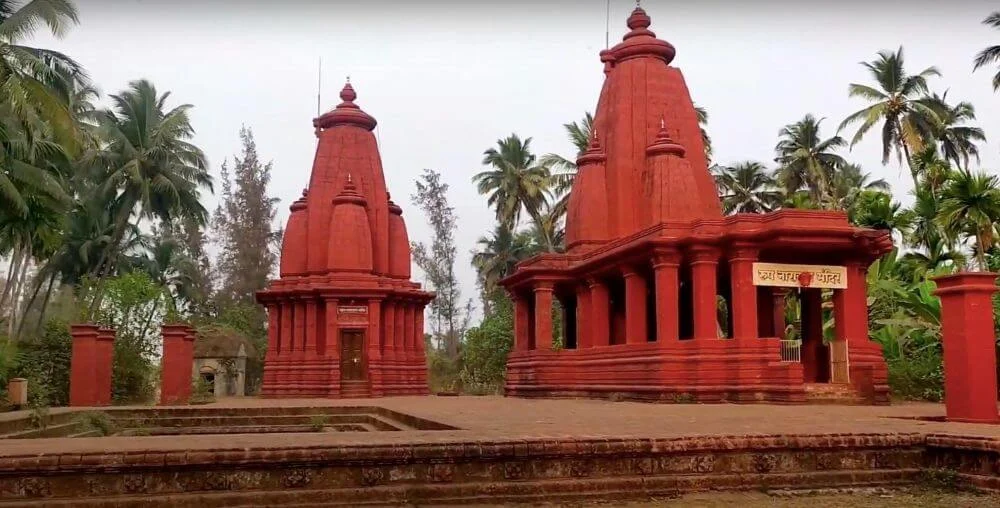
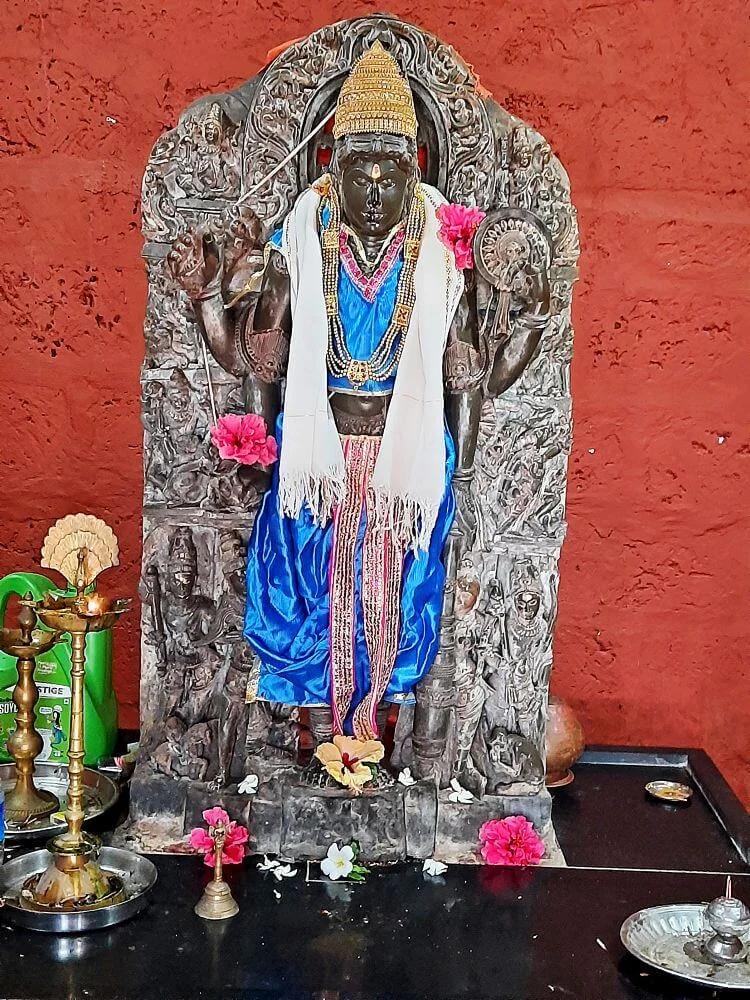
Set amid lush coconut and betel‑nut groves in the coastal village of Diveagar, the Shree Rupnarayan Temple is a stunning example of Konkan’s rich religious heritage. Dating back to the 9th century, this shrine dedicated to Lord Vishnu is celebrated for its exquisite idol, historical inscriptions, and rare craftsmanship that draws both devotees and historians.
Diveagar’s history stretches from the 8th to the 13th centuries under the Shilahara dynasty. Copper plate inscriptions from as early as 1060 CE refer to the settlement as Deepakagar, and local records show it as a prosperous hub despite threats from Arab and Portuguese traders. Significantly, one 11th-century inscription found here is the earliest known document written in Old Marathi in the Devanagari script, chronicling land donations and religious grants to Brahmins by Shilahara rulers.
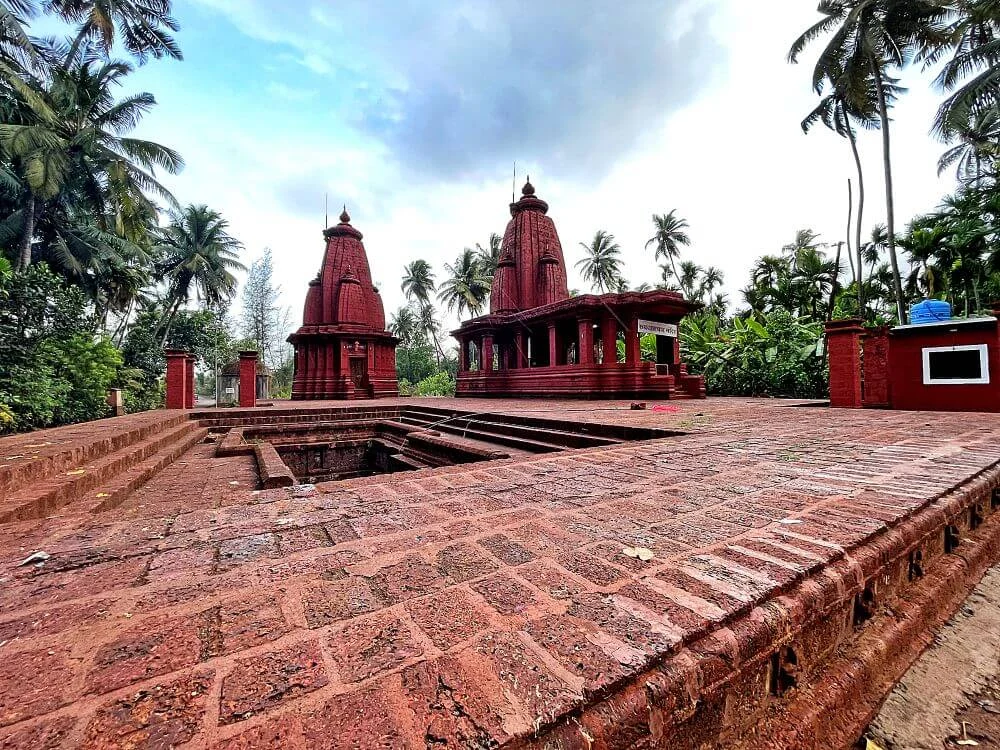
The current temple, restored in 1960, stands on a raised stone platform with a tall lamp pillar (Deepstambha) at its entrance. Originally constructed in traditional laterite, it has been rebuilt in pink laterite stone, housing a porch, an open sabhamandap (assembly hall), and the sanctum (garbhagriha).
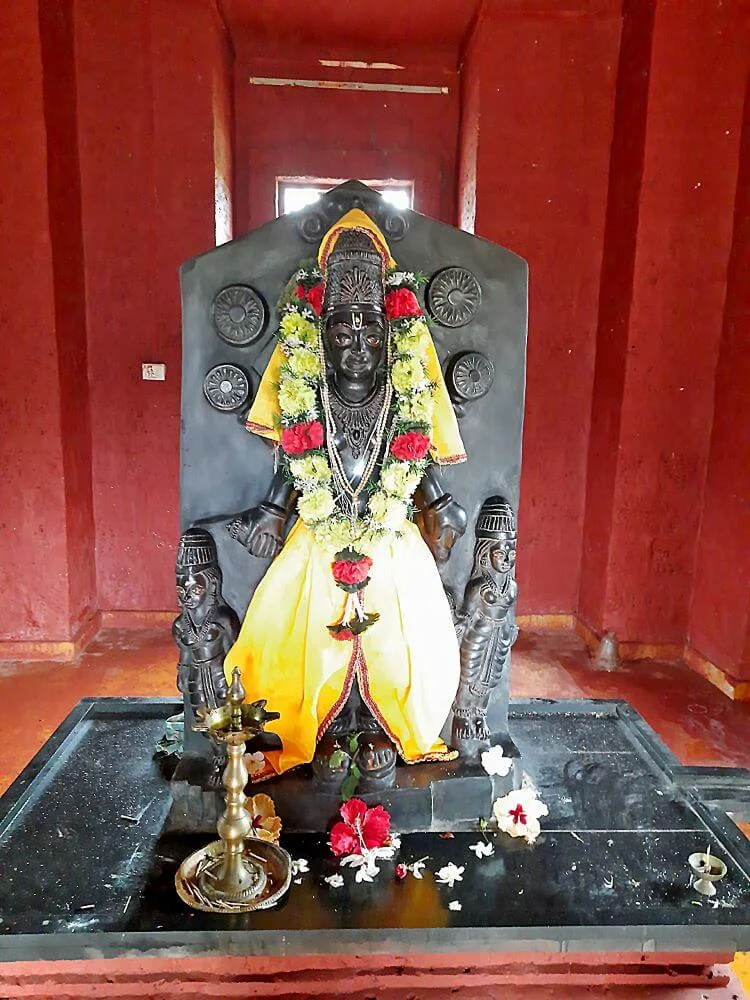
The idol of Lord Rupnarayan (Vishnu) is the temple’s central marvel — carved around the 9th–13th century from green‑black granite sourced from the Madumalai region in Tamil Nadu. Standing at approximately 1.5 meters tall, the idol is adorned with lotus-petal-shaped eyes, jewelled earrings, pearl necklaces, sacred thread, waistband, armlets, rings, and a lotus-shaped crown. Southern Indian influence can be seen in the lotus motifs and the tiger-face crest above the crown.
Intricate carvings surrounding the idol depict all ten avatars (Dasavatara) of Vishnu, including Matsya, Kurma, Varaha, Vamana, and a dramatic Narasimha slaying Hiranyakashipu. Additional reliefs portray Buddha, Krishna subduing Kaliya, and celestial scenes of Brahma, Shiva, gandharvas, and musicians. In front of the temple lies an ancient Pushkarini (stone stepwell), enhancing both the temple’s function and its historical allure.
A captivating local legend tells of foreign invaders attempting to steal the idol by boat. Villagers resisted fiercely until the thieves abandoned the idol ashore, where a later restoration revealed a bullet embedded in the idol’s chakra — now preserved as part of the temple’s heritage.
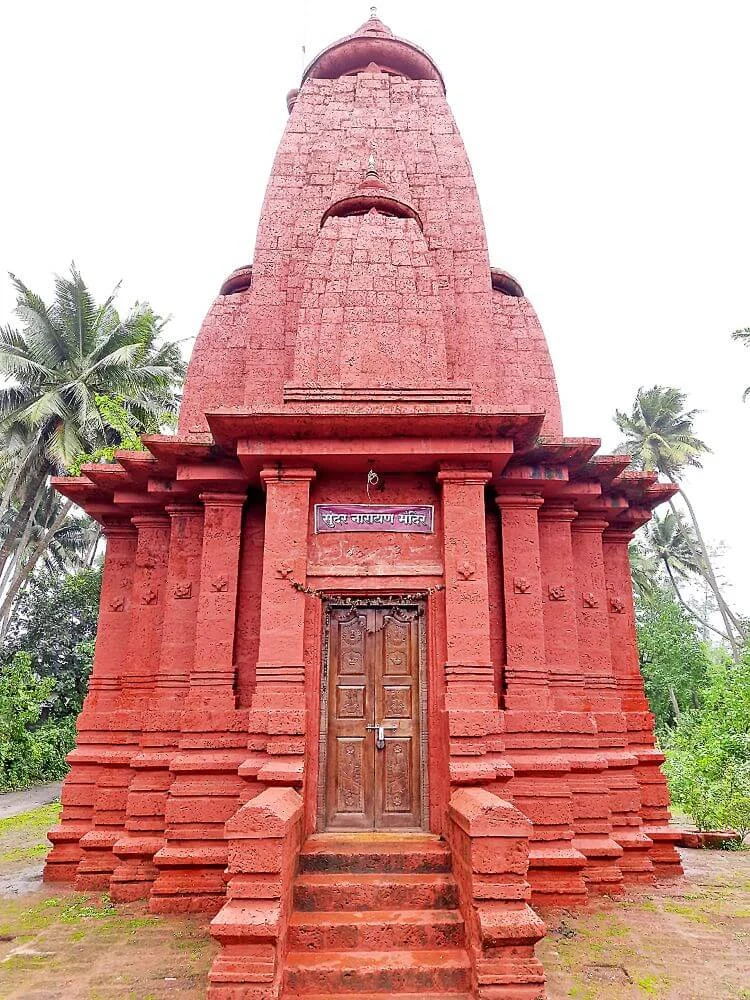
Nearby, visitors can also explore the Sundar Narayan Temple, another Vishnu shrine from the same era. With its blend of mythology, artistry, and historical significance, Shree Rupnarayan Temple remains a highlight of Diveagar’s religious trail and an essential stop for culture and history enthusiasts
This Website is developed by

Aseemit Services & Solutions
Contact : +91 7219259149
Nearby facilities ...
-
Bus Stop :
Diveagar -
Railway Station :
Mangaon -
Airport :
Mumbai Airport
-
Mechanic :
Diveagar -
Petrol Pump :
Diveagar -
Medical Help :
Diveagar