Washroom
Aailable
Medium
Poor
Network
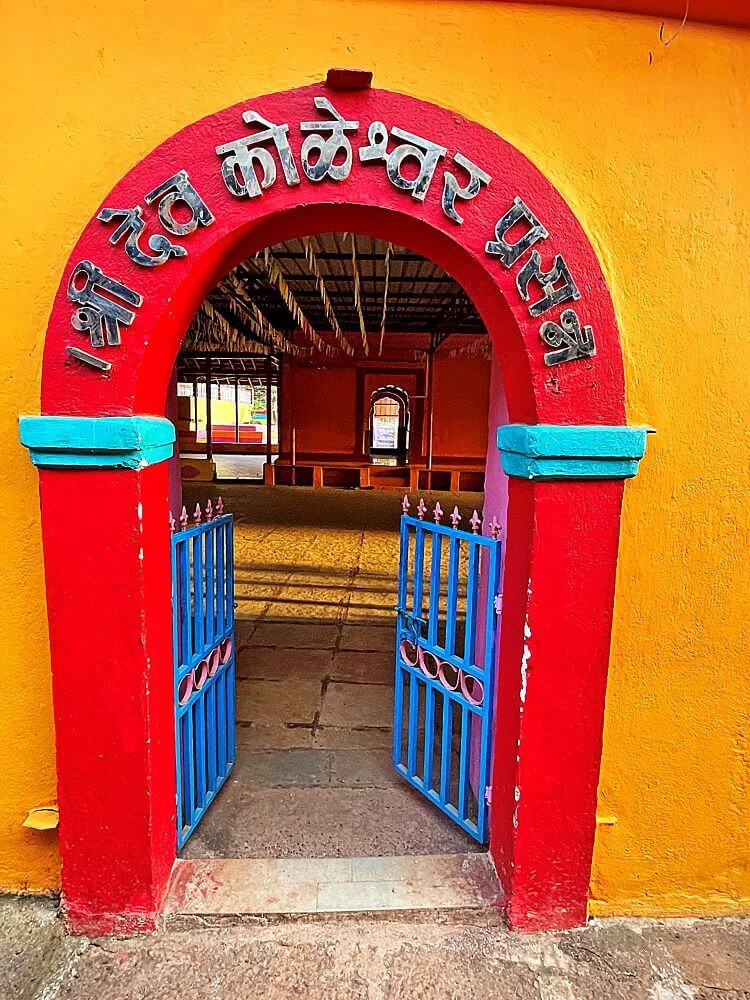
A narrow motorable road leads up to the temple gateway, with easy access for private vehicles. Parking area is very limited. Road is very narrow.
November to February and during Mahashivratri or Kartik Festival
About the place ...
Nestled in the serene coastal village of Kolthare near Dapoli, the Shree Koleshwar Temple is one of Ratnagiri’s oldest and most sacred Shiva shrines. Worshipped as the God of the Kolis, Koleshwar Mahadev is revered by both the local Koli community and many Kokanastha Brahmin families, who regard him as their kuldevata (family deity). The temple holds deep spiritual and cultural importance in Konkan’s heritage and stands as a timeless symbol of devotion, nature, and tradition.
Koleshwar is venerated as a Trigunatmak deity — embodying the divine essence of Brahma, Vishnu, and Mahesh. Its sacred tirtha (holy tank) is believed to possess curative powers, particularly for chronic diseases, attracting devotees seeking blessings and healing. Local legends trace the temple’s origin to a miraculous event: a fisherman, while plowing his field, struck the ground and saw blood emerge from the soil. That night, Lord Shiva appeared in his dream, revealing his presence. The next day, a self-manifested (Swayambhu) Shivalinga was discovered, leading to the establishment of a small shrine.
Historical records mention that in 1837, a devotee named Joshi from Panchanadi village built the temple, later expanded by a member of the Late family. Every Phalguna month, descendants of the original fisherman bring a symbolic offering from Burondi village, continuing a centuries-old tradition. Ancient folklore also claims that the Pandavas once stayed here, and their footprints remain visible on nearby rocks.
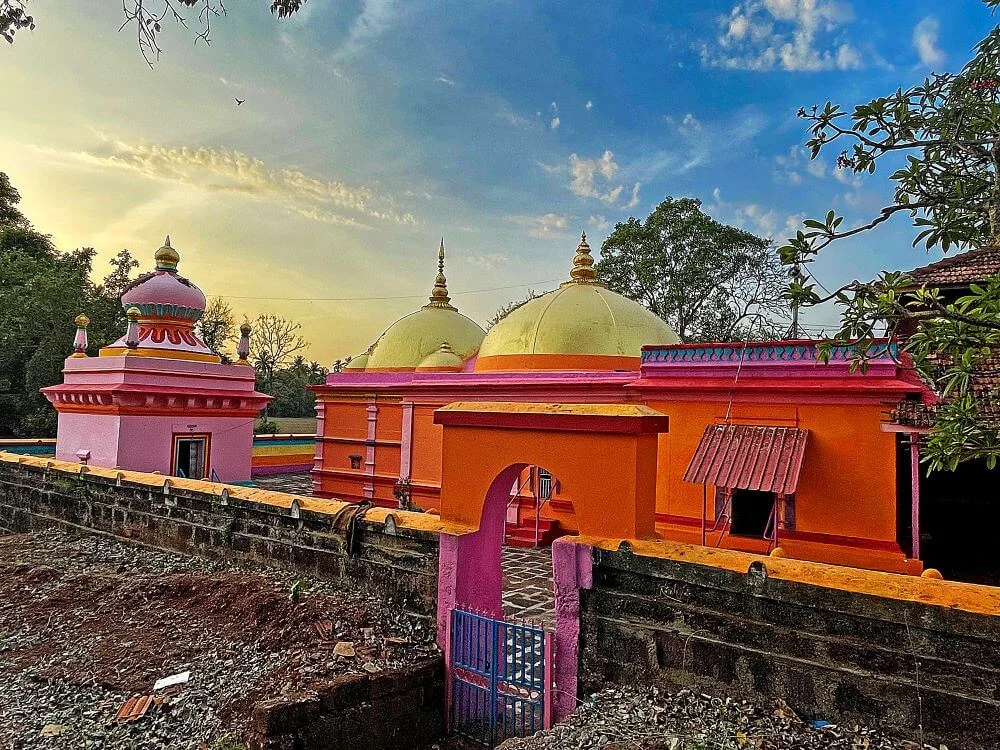
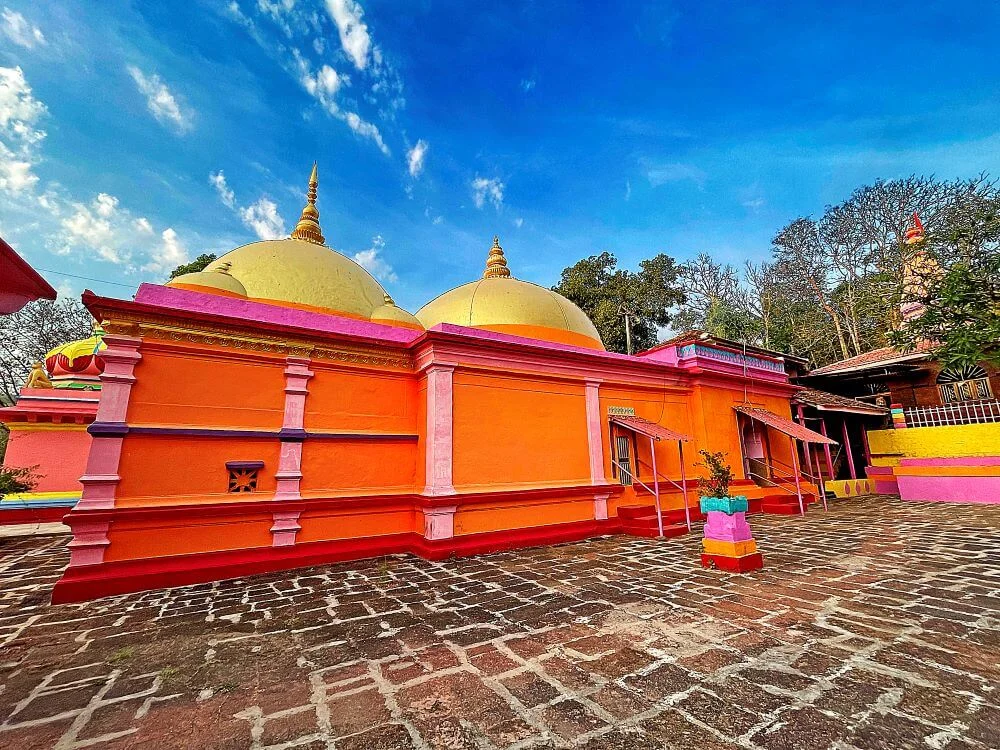
Approaching the temple from the Dapoli–Dabhol road, visitors cross a stream via a small iron bridge and pass through groves of coconut and betel-nut trees. The Peshwa-era temple, constructed from laterite stone, features thick fortified walls, about five feet wide, encircling a spacious paved courtyard. At the entrance stand a lamp tower (Deepmala), Hanuman temple, Tulsi Vrindavan, and small shrines dedicated to Vishnu–Lakshmi and Jakhai Kaleshri.
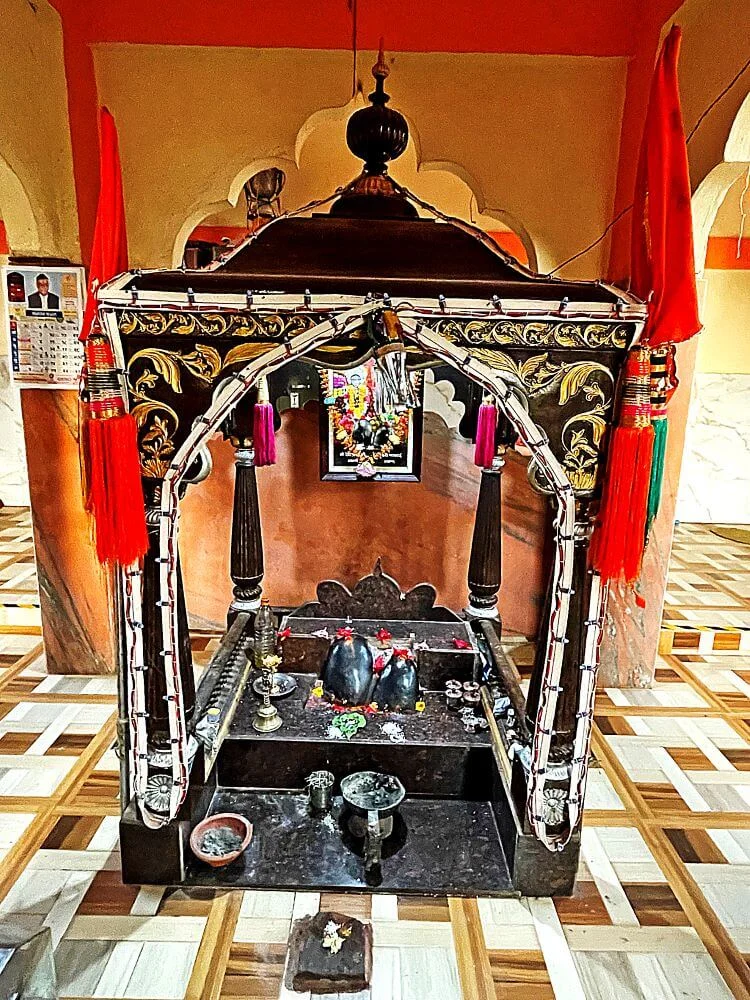
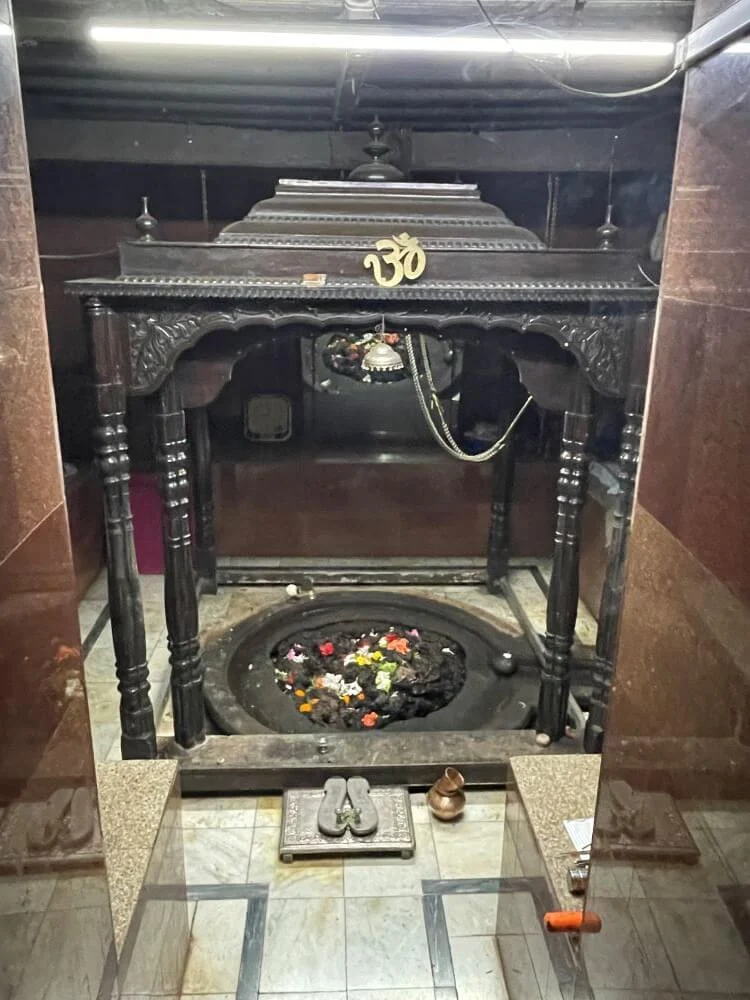
Inside, the temple is arranged in the classic layout of Darshan Mandap, Sabhamandap, and Sanctum (Garbhagriha). The sanctum’s entrance is purposefully low, symbolizing humility — devotees must bow to enter. The Shivalinga rests beneath a wooden Meghadambari (canopy), and locals believe a distinct “lion’s roar” sound echoes when prayers are performed inside. The semi-circular domes of the hall and sanctum show a blend of Peshwa and Islamic architectural influences, with intricate carvings adorning the rear wall.
The temple’s seven-day Kartik Festival (from Kartik Shuddha Dashami to Kartik Vadya Pratipada) culminates with a grand Mahaprasad, while other major events include Mahashivratri, Vaikuntha Chaturdashi, and Tripurari Purnima.
Koleshwar is the kuldevata of numerous Kokanastha Brahmin families — including Barve, Mile, Chatre, Bhave, Kolhatkar, Mahajan, Shethe, and others. Apart from religious importance, Kolthare is known as the “village of temples,” home to shrines of Rama, Datta, Durga, and Warrebua. The village also plays a key role in Olive Ridley turtle conservation, hosting a coastal breeding protection project since 2005.
Blessed with divine energy, scenic beauty, and a glorious past, Shree Koleshwar Temple continues to be a focal point of faith and heritage for the Konkan region
This Website is developed by

Aseemit Services & Solutions
Contact : +91 7219259149
Nearby facilities ...
-
Bus Stop :
Kolthare -
Railway Station :
Khed -
Airport :
Ratnagiri
-
Mechanic :
Dapoli -
Petrol Pump :
Dapoli -
Medical Help :
Kolthare